
16 States Challenge EFCC’s Legality in Supreme Court Hearing Set for October 22
 Follow on Google News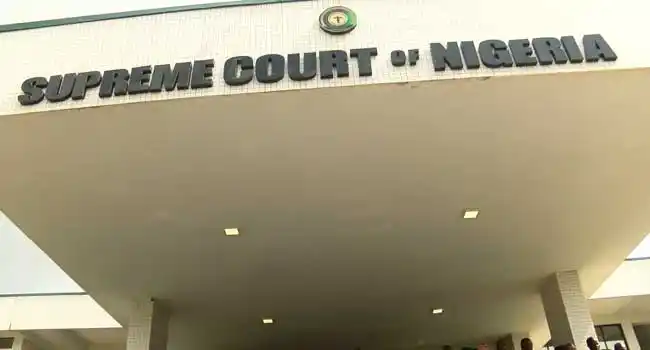
The Supreme Court has set October 22 to hear a landmark case brought by 16 state governments, challenging the legality of the Economic and Financial Crimes Commission (EFCC). This case, initiated by the Kogi State government and joined by 15 other states, questions the constitutionality of the laws that establish the EFCC, marking a pivotal moment in Nigeria’s legal landscape.
A seven-member panel of Justices, led by Justice Uwani Abba-Aji, scheduled the hearing after consolidating the case originally filed by Kogi State. The states involved in the case, marked SC/CV/178/2023, include Ondo, Edo, Oyo, Ogun, Nassarawa, Kebbi, Katsina, Sokoto, Jigawa, Enugu, Benue, Anambra, Plateau, Cross River, and Niger.
During Tuesday’s proceedings, the lawyers representing the states made their submissions, with most seeking to be co-plaintiffs. Two states, however, requested an order for consolidation. Kogi State’s counsel, Abdulwahab Mohammed (SAN), urged the court to join those states wishing to be co-plaintiffs and streamline the process for those seeking consolidation. Justice Abba-Aji granted these requests and adjourned the matter for hearing on October 22.
ALSO READ: Nigeria Can Rule the World and Conquer Corruption, Says EFCC Boss on 64th Independence Anniversary
At the heart of the suit, the states argue that the EFCC’s formation violated constitutional provisions. They claim that the law establishing the commission lacked the required approval from the majority of state Houses of Assembly, rendering it unconstitutional. Additionally, Kogi State is seeking declarations that the EFCC, along with the Nigerian Financial Intelligence Unit (NFIU) or any other federal agency, lacks the authority to issue directives or investigate the state’s finances.
The case gains further significance as it unfolds amid the EFCC’s ongoing legal actions, including a trial involving former Kogi State governor Yahaya Bello over an alleged N110 billion fraud. In response, the Kogi State Assembly recently passed a law creating a state-owned anti-corruption agency, signed into law by Governor Usman Ododo.
The outcome of this case could have far-reaching implications for Nigeria’s legal framework and the future of anti-corruption agencies across the nation.



Comments
0 comments