NEWS
COP29 Faces Deadlock as Developing Nations Reject $250 Billion Climate Offer
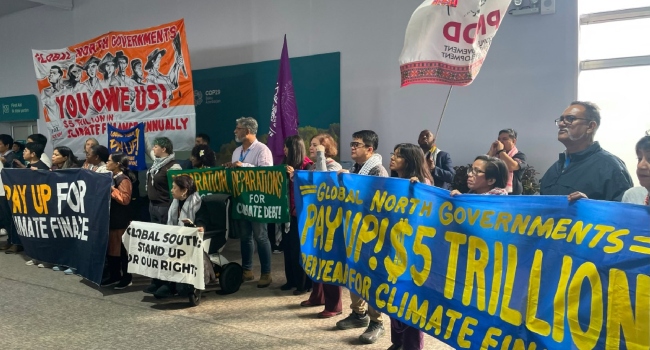
Negotiators at COP29 in Baku, Azerbaijan, have reached an impasse after wealthy nations proposed increasing their climate aid to $250 billion annually by 2035. The offer, made after nearly two weeks of negotiations, was swiftly rejected by developing countries, who are grappling with the devastating effects of climate change, such as rising sea levels, droughts, and increasingly frequent natural disasters.
The proposal from richer nations came in an effort to fulfill promises of climate action, but it was viewed as insufficient by many of the countries most vulnerable to global warming. Tina Stege, climate envoy for the Marshall Islands, criticized the offer, calling it “shameful” for a nation at risk of disappearing under rising seas. The Alliance of Small Island States echoed her concerns, accusing the offer of showing “contempt” for vulnerable populations.
Representatives from Africa, another region facing urgent climate challenges, also rejected the proposal, calling it “totally unacceptable” and demanding at least $500 billion annually to address climate adaptation and resilience. With inflation, some felt the $250 billion would be much less impactful in reality.
ALSO READ: 2024 Marks Record-Breaking Year for Global Temperatures as COP29 Urges Urgent Climate Action
The UN’s climate experts had previously advised that developed nations should triple their $100 billion annual pledge by 2030. Brazil, set to host COP30, has backed a figure closer to $300 billion, reinforcing the need for more robust financial support from wealthier countries.
As the talks dragged on, with negotiators working through the night, the focus also shifted to the broader goal of raising $1.3 trillion per year by 2035, not only from developed nations but also from the private sector. However, activists like Kenyan representative Obed Koringo of CARE dismissed the $250 billion offer as “a joke” and suggested that “no deal is better than a bad deal.”
Further complicating the negotiations were disagreements over which nations should contribute to climate funding. While the United States and European Union pushed for newly wealthy emerging economies like China to increase their contributions, China maintained its stance as a developing nation and resisted mandated commitments.
In addition to financial support, discussions also included a push for stronger commitments to phase out fossil fuels, but countries like Saudi Arabia objected to any language that would target oil and gas industries. German officials voiced frustration, accusing Saudi Arabia of undermining progress on crucial environmental measures.
Despite these tensions, there was some optimism as Avinash Persaud, special advisor on climate change to the president of the Inter-American Development Bank, noted that the talks were nearing a compromise. However, he acknowledged that no deal would be without its difficulties, signaling the complex and contentious nature of the ongoing negotiations.
With global climate impacts already at crisis levels, including deadly storms in the Philippines, floods in Spain, and droughts in Ecuador, the pressure on negotiators to secure a deal that addresses the needs of the most affected nations has never been higher. As COP29 continues, it remains to be seen if a deal can be struck that satisfies both the urgent needs of developing nations and the financial realities of wealthier countries.