NEWS
Nnamdi Kanu Sentenced to Life in Prison After Landmark Verdict
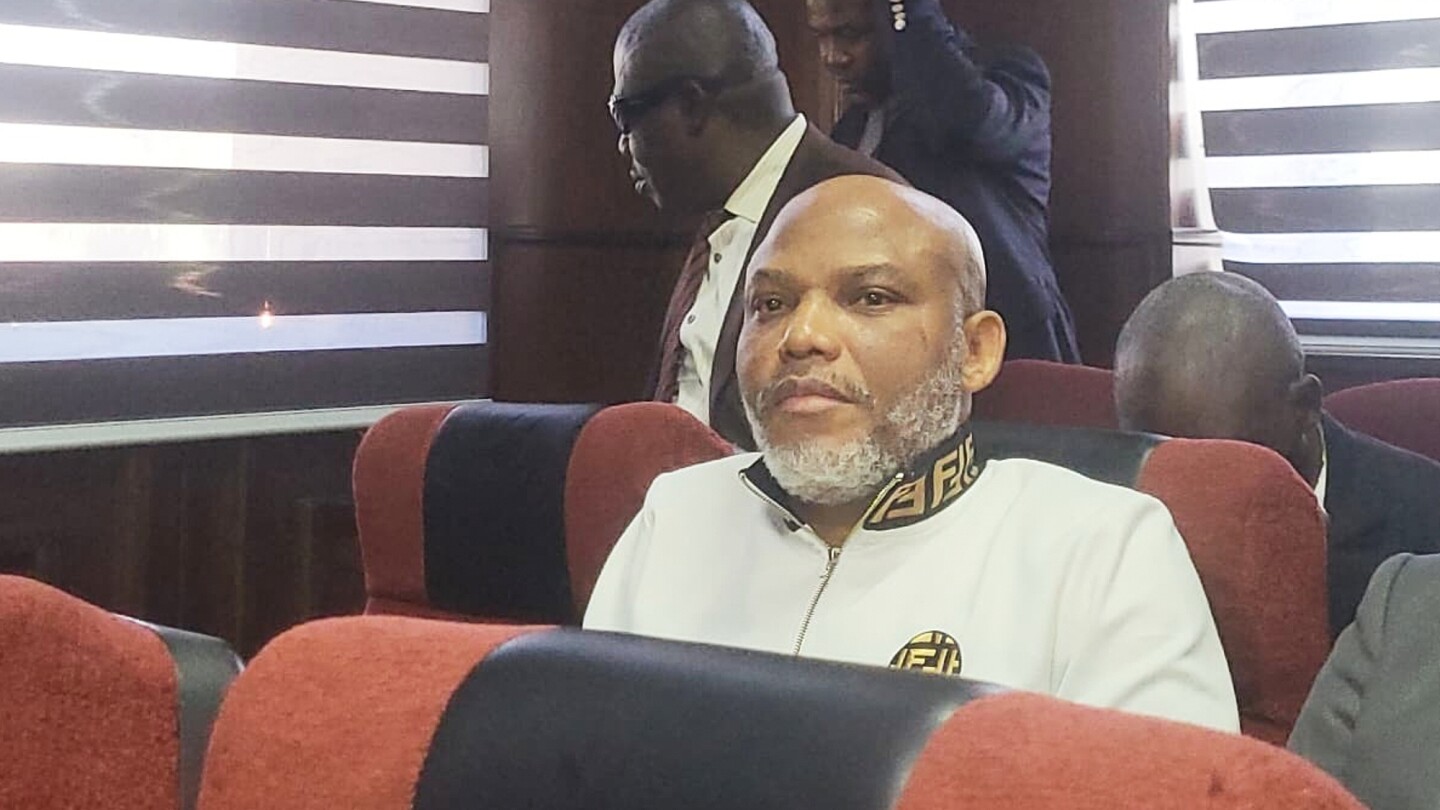
A Nigerian court on Thursday handed down a life sentence to Nnamdi Kanu, the embattled leader of the banned Indigenous People of Biafra (IPOB), finding him guilty on all seven charges of terrorism. The verdict, delivered by Justice James Omotosho in Abuja, marks the dramatic conclusion to a protracted legal battle that has deeply divided the country. ( Kanu, who also holds British citizenship, was prosecuted for inciting violence, enforcing “sit-at-home” orders in southeastern Nigeria, and advocating for the secession of Biafra. Prosecutors had pressed for the death penalty, but the judge opted instead for life imprisonment, citing global trends against capital punishment and invoking a moral call for mercy.
During the trial, Kanu declined to mount a defense and represented himself after dismissing his own legal team. The court determined he had waived his right to defense when he failed to present any counter-arguments within the time allotted.
After the prosecution closed its case, he filed motions disputing the court’s jurisdiction and claiming that the statutes under which he was charged had been repealed.
The court also ordered that a radio transmitter seized from Kanu which prosecutors said was used to incite violence be forfeited to the federal government. Justice Omotosho recommended that Kanu be held in protective custody, citing his alleged capacity for violence.
Kanu’s legal team has vehemently criticized the verdict. His lawyers argue that Nigeria’s supreme court ruling that reinstated the terrorism charges in 2023 was unconstitutional, and they have filed an appeal challenging both the court’s use of repealed laws and its jurisdiction.
Human rights activist Omoyele Sowore publicly condemned the verdict as a “political decision” rather than a judicial one, accusing President Bola Tinubu’s administration of directing the outcome. Meanwhile, members of the Igbo community have expressed alarm that the ruling could spur unrest in the southeast, warning that it risks reigniting deep-seated tensions tied to historical grievances.
Kanu’s ordeal spans a decade of conflict with the state. He was first arrested in 2015, fled on bail in 2017, and was later extradited from Kenya in 2021. In 2023, Nigeria’s Supreme Court overturned an appellate court’s earlier decision that had quashed the charges, setting the stage for the retrial.
The sentencing marks a significant moment for Nigeria’s fight against separatist violence, though it may also deepen the political chasm between the federal government and Biafran sympathizers.